
METRO aims to improve its environmental performance in several ways. Our priorities: reduce our greenhouse gas emissions, manage our waste and reduce food waste.

Our ambition is to reduce our greenhouse gas emissions to limit global warming by focusing our efforts on key sectors over which we have direct operational control. Through these actions, we aim to contribute to the collective effort to transition to a lower-carbon economy.
Objective
For information on our key performance indicators, see our 2022-2026 Corporate Responsibility Plan
Our ambition is to reduce our greenhouse gas (GHG) emissions to limit global warming by focusing our efforts on key sectors over which we have direct operational control. Through these actions, we aim to contribute to the collective effort to transition to a lower-carbon economy.
To learn more
Fighting climate change
In 2023, we continued our efforts to reduce GHG emissions by 37.5% of Scopes 1-2 and some Scope 3 categories by 2035 compared to 2020.
Following our commitment to rigorously evaluate the feasibility and costs of achieving the Science Based Targets initiative (SBTi) Net-Zero Standard, we reviewed and adjusted the scope of our existing objective.
In November 2023, we committed to set near-term company-wide GHG emission reduction targets in line with the SBTi Standard.
Our new near-term science-based targets (SBT), which have yet to be approved by SBTi, are consistent with the level of decarbonization required to keep global temperature increases to 1.5°C compared to pre-industrial temperatures.

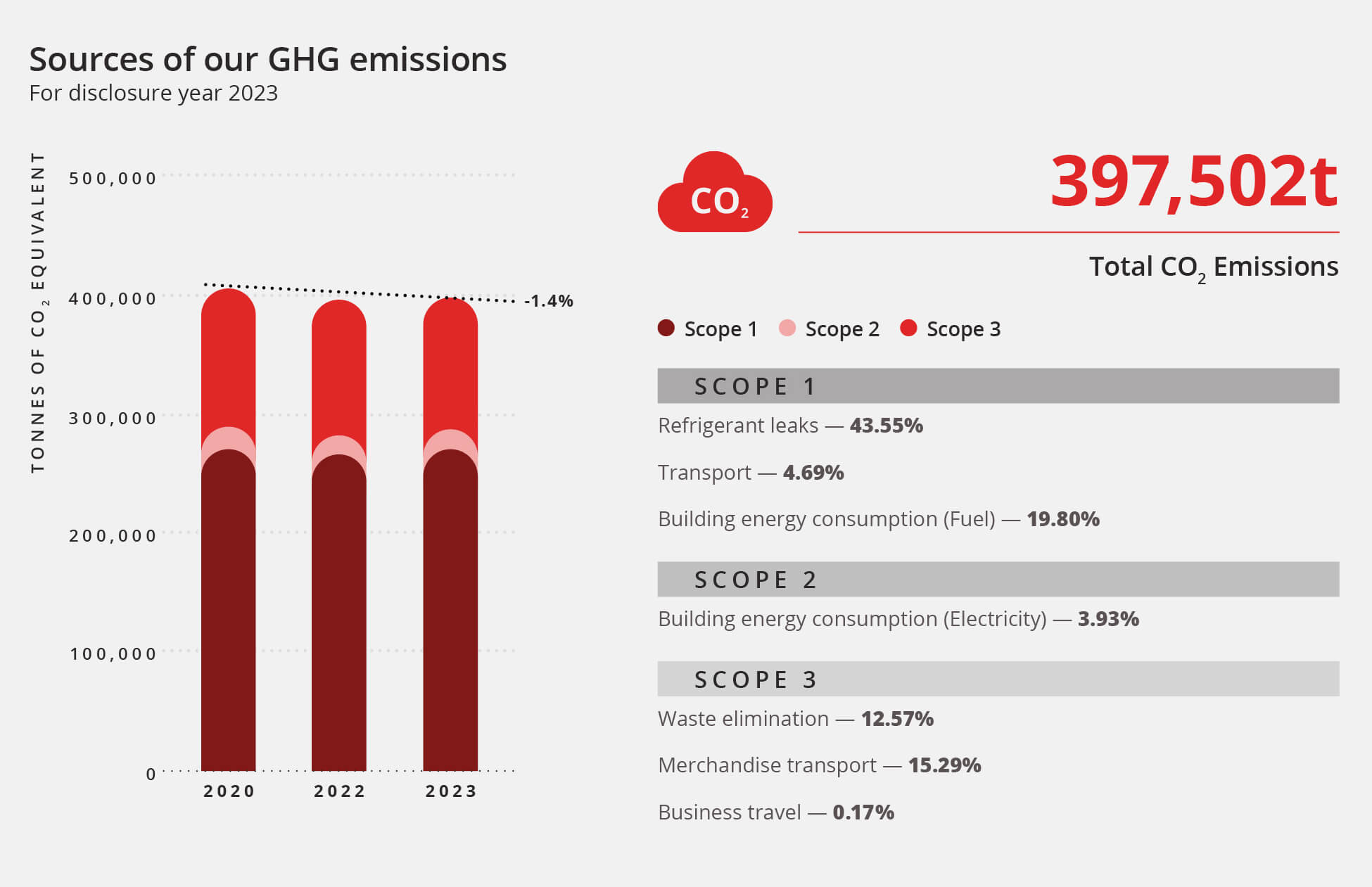
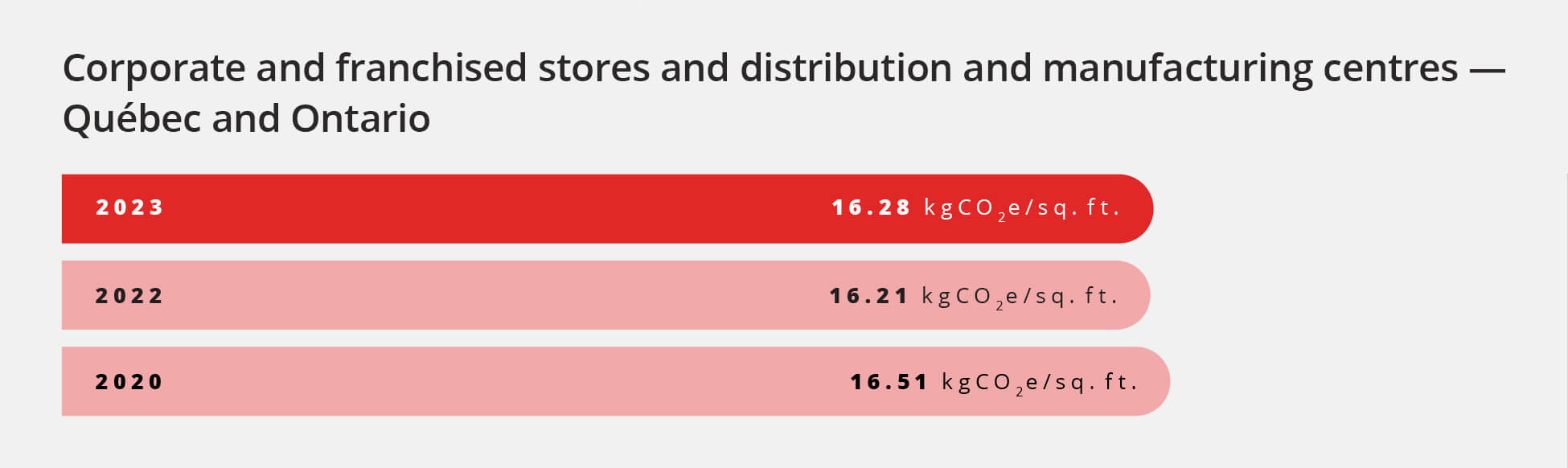
2023 GHG emissions details are available in our GHG emissions infosheet.

For the 15th consecutive year, we have submitted our CDP Climate Change declaration covering the 2022 fiscal year. For more details, please refer to METRO's TCFD Report and CDP Climate Change declaration.
In 2022, we announced our support to the Task Force on Climate-related Financial Disclosures (TCFD) and our commitment to implement actively TCFD’s 11 recommendations in the coming years.
As part of the recommendations, METRO undertook its first climate scenario analysis in 2023 to proactively identify and evaluate potential climate-related risks and opportunities in 2030, 2050 and 2090. The results of this analysis will be used to provide additional information to all stakeholders. This work allows us to effectively identify and prepare for the impacts of climate change on our business models.
To learn more, see our Corporate Responsibility Report 2023 (PDF).
Recognizing the close interdependence between the food industry and biodiversity, in 2023, METRO published its first biodiversity statement, which consolidates METRO’s policies, objectives and commitments related to preserving biodiversity and details our expectations for our suppliers concerning this topic.
Additionally, our voluntary disclosure to both CDP Climate Change and CDP Forests demonstrates the importance we put on addressing biodiversity issues in our procurement and environmental strategies and across our operations.
Our ambition is to avoid sending waste generated by our activities to landfill with the view to achieving zero waste at our locations, representing a diversion rate of at least 90%. We intend to enhance our performance by mobilizing our teams to optimize our operational practices.
Objective
For information on our key performance indicators, see our 2022-2026 Corporate Responsibility Plan
Our ambition is to avoid sending waste generated by our activities to landfill with the view to achieving zero waste at our locations, representing a diversion rate of at least 90%. We intend to enhance our performance by mobilizing our teams to optimize our operational practices.
To learn more
Our waste management program aims to reduce the environmental impacts of eliminating residual materials, including GHG emissions, and facilitate their valorization.
The waste objectives related to diversion are divided into two targets: one for stores and one for distribution/production centres.
We aim for all stores to achieve at least 50% diversion, 25% of stores to achieve 80 to 89% diversion, and 25% of stores to achieve zero waste.
As for our distribution and production centres, we aim to achieve zero waste.
Key to diversion are our recycling and recovery streams.
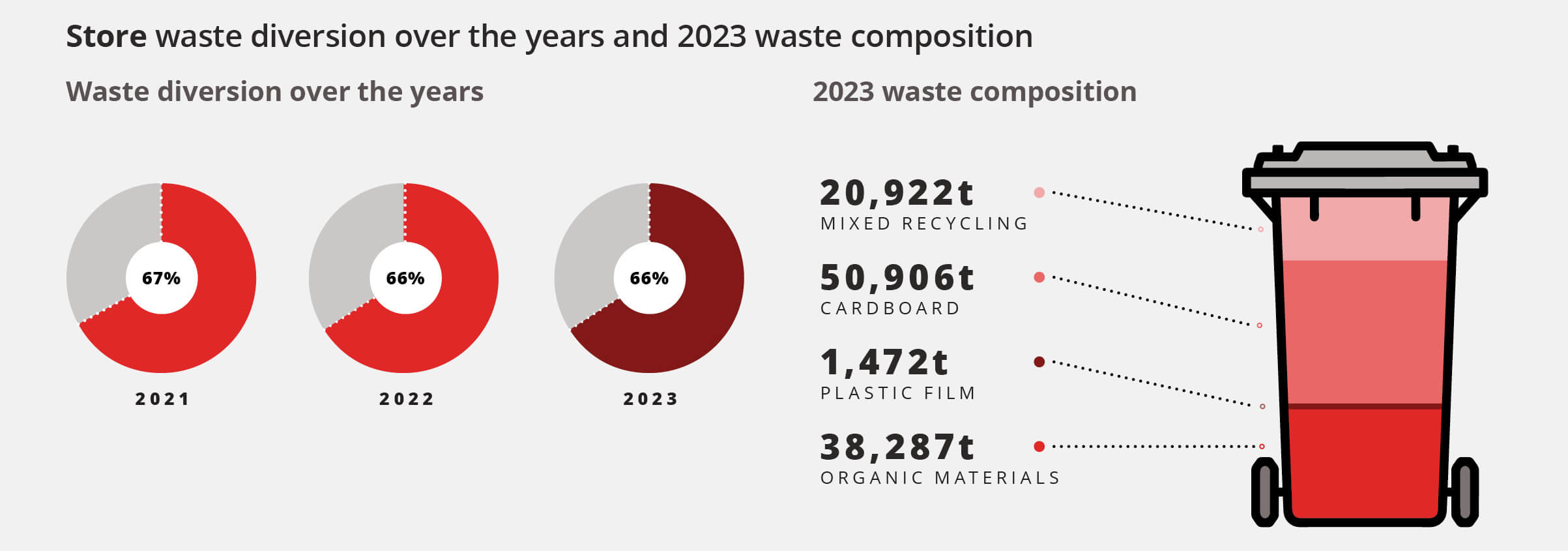
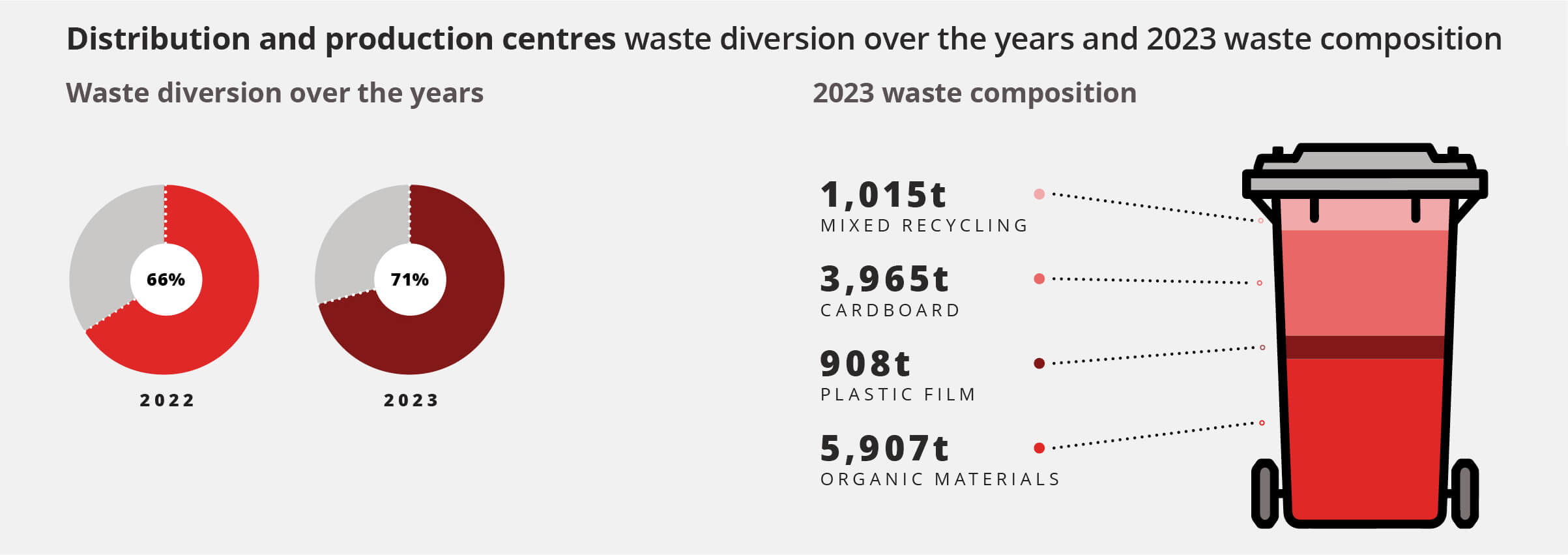
For more details on our methodology and performance, please refer to our Waste Diversion infosheet.
Our ambition is to ensure that food that is safe for consumption and food residue generated by our activities are not thrown away. By redistributing them to organizations or giving them a second life, we are helping to address food insecurity and reduce the GHG emissions caused by landfilled organic waste.
Objective
For information on our key performance indicators, see our 2022-2026 Corporate Responsibility Plan
Our ambition is to ensure that food that is safe for consumption and food residue generated by our activities are not thrown away. By redistributing them to organizations or giving them a second life, we are helping to address food insecurity and reduce the GHG emissions caused by landfilled organic waste.
To learn more
METRO is committed to reducing the food waste generated by our activities by half by 2025 compared to 2016 in an effort to tackle two major challenges for society:
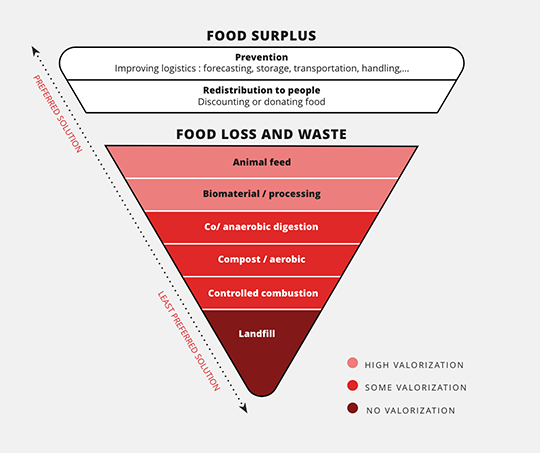
Our food loss and waste methodology aligns with the Food Loss and Waste Accounting and Reporting Standard, including its recommendations on the preferred solutions to manage surplus and FLW.
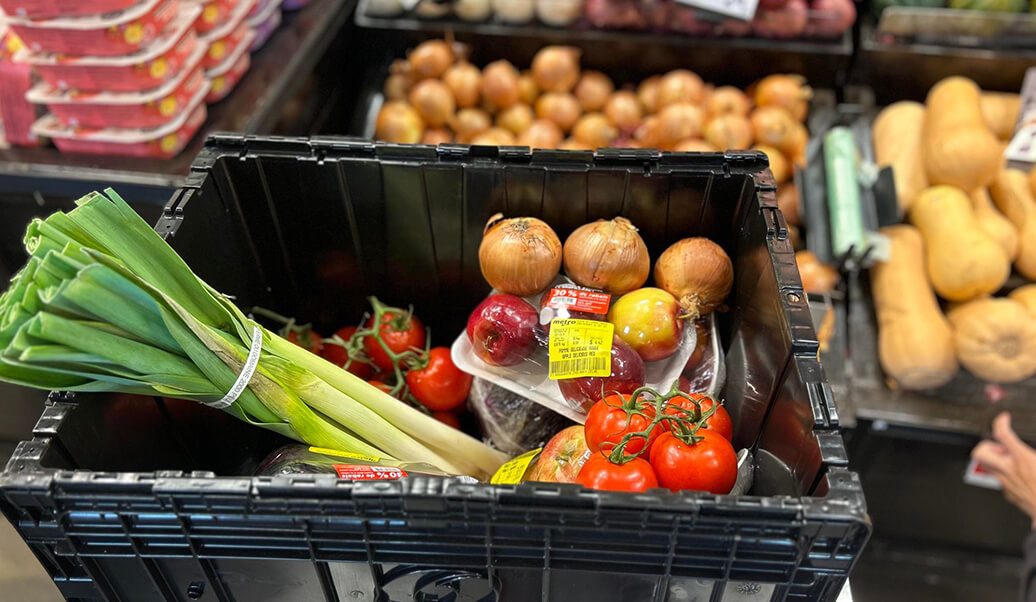
As a priority, we aim to prevent food surplus. Then, food surplus must be redistributed to feed humans. For example, our One More Bite program redistributes unsold products to people in need through our charitable partners: Food Banks of Québec, Second Harvest, and Feed Ontario. In 2023, approximately 4 million kilograms of food had been recovered by them, helping to fight food insecurity while keeping waste out of landfill.
For food products that cannot be sold or donated for human consumption, we look for ways to dispose of them responsibly through high valorization destinations: animal feed or biomaterial processing.
When those destinations are not possible, we prioritize destinations with some valorization: anaerobic digestion, compost, and controlled combustion. Sending food to landfill is the least preferred solution, thus we aim to send zero food to this destination.
For more details on our methodology and performance, please refer to our Food Loss and Waste infosheet.
To consult our environmental reference documents, click here.